Use of Phylogenetic Analysis to Study Evolutionary
Relationships
I. Objectives:
1. To learn how to do phylogenetic analysis as a means of
analyzing and predicting evolutionary relationships
II. Background:
The evolution of living organisms has two components. The
first is the vertical or timewise component, which gives rise to different
“grades” of specialization (ancestral vs. advanced traits). However, if that
was the only component, there would only be one species that would become
increasingly more advanced, only exhibiting directional change through time.
The second, the horizontal, component is diversification, the degree of
divergence into different lines or “clades” (clado = branch, sprout)
that has taken place from the ancestral condition to the present diversity
of forms.
Phylogeny is the study of the evolutionary development or
history of a group of organisms (phylo = tribe). Classic phylogeny
looks at and compares individual species, while other branches of phylogeny
expand upon that, looking at larger groupings of organisms such as genera,
families, orders, etc., which, then, are often referred to as “operational
taxonomic units” or “OTUs.”
While there are exceptions to the rule, in general, organisms
with similar structures have a common evolutionary lineage. Thus we observe,
for example, that there are quite a variety of organisms around us which are
covered in feathers and have their front limbs modified as wings. Biologists
believe that those similarities in appearance, are an indication that those
organisms are all related, a grouping which we call “birds.”
However, at times, the presence of certain traits may not
accurately indicate evolutionary relationships. For example, a fish is
aquatic, and that is considered a “primative” or “ancestral” condition, yet
the aquatic lifestyle of whales is considered an advanced trait because they
are “secondarily aquatic,” having evolved from terrestrial ancestors. Thus,
the traits used in the comparison of organisms must be carefully chosen. The
outcome of the phylogenetic analysis, the predicted evolutionary
relationships, is/are only as good as the validity of the traits one has
used to compare the organisms involved.
Biologists also believe that the stages in, the progression of,
the embryonic development of a species goes through a series of stages
analogous to all the steps in the evolutionary history of that species,
summed up by the phrase, “ontogeny recapitulates phylogeny” (onto =
being, existing; phylo = tribe; -geny = production), and thus,
comparative embryology is also used in the determination of evolutionary
relationships.
In performing a phylogenetic analysis, first the specimens
and/or taxonomic groups to be compared are identified. Often, 10 to 20
individuals or groups are compared. Using fewer taxa might result in a
skewed, inaccurate analysis, and using considerably more taxa could result
in difficulty determining valid traits to use and/or unwieldy calculations.
Then, the most significant traits are identified and
quantified. For each trait, a “primitive” or “ancestral” form is identified
and assigned a value of “0” and an “advanced” form is identified and assigned
a value of “1.” As an example, when comparing various animals, the method
of providing nutrients to the embryos is one trait that might be included.
In that case, embryonic development within an egg which may include a yolk
and be surrounded by an eggshell would be considered a primitive trait and
be assigned a value of “0,” while embryonic development within the mother’s
uterus, attached to a placenta via an umbilical cord, would be considered an
advanced trait and be assigned a value of “1.” These need to be either/or,
yes/no choices, so for example, if the number of toes an animal has is one
of the traits that would be useful, that could not be broken down into
categories of 5 toes vs 4 toes vs 2 toes vs 1 toe, but rather, would need
to be divided into something such as full number of toes (5) as the primitive
trait, and reduced number (2-toed and 1-toed grouped together) as the
advanced trait. Again, this would only work if those groupings are
legitimate, accurate categories to use for the group of organisms being
compared: for example, domestic dogs usually only have four toes. While
enough traits must be provided to reliably distinguish evolutionary
relationships, there is also an upper limit to the useful number of traits,
above which no more information will be gained. Thus, it is common to use
between 60 and 100 traits when doing this type of analysis.
Next, a table/matrix is created in which each taxon is
assigned a value of “0” or “1” for each of the traits being used. Following
creation of that data matrix, a number of calculations are performed, and the
resulting data are graphed to show the evolutionary relationships. The
resulting phylogenetic trees can only show which split occurred
1st, 2nd, etc., but in and of themselves, tell nothing
about the timing of those splits (that would have to be determined by other
means). Also, divergence (the list of taxa being compared) is typically
shown in equal units across the width of the paper.
III. Materials Needed:
- calculator
- semicircular graph paper
(attached)
- protractor
IV. Procedure:
For this lab, work in groups of 4 to 5 people so you can share
and discuss ideas as you work through the following steps.
- Determine the taxa which will be
compared. As an example of how
to do the calculations, the farm animals mentioned in the Taxonomy Lab (duck,
chicken, pig, cow, and horse) will be used, with the addition of a lizard.
For this lab, you are asked to compare the orders of insects listed in the
Data section, below.
- Determine the traits which will be
used to compare those taxa, and for
each trait, designate a “primitive” and “advanced” form. For example,
for the farm animals, I came up with these ten traits:
- Body Covering:
(0) scales or modified scales (feathers)
(1) hair
- Number of Toes:
(0) 4 or 5
(1) 1 or 2
- Webbing between toes
(0) absent
(1) present
- Embryonic Development
(0) eggs in egg shell (oviparous)
(1) young in uterus with placenta (viviparous)
- Digestion
(0) food continues through system
(1) specialized 4-part stomach with fermentation &
regurgitation
- Body Temperature Regulation
(0) cold-blooded
(1) warm blooded
- Large Canine Teeth/Tusks
(0) absent
(1) present
- Heart, Num. of Chambers
(0) 3-chambered
(1) 4-chambered
- Type of Front Limbs
(0) front limbs modified for walking
(1) front limbs modified for flying
- Presence of Horns on Head
(0) none
(1) horns present
For the insect orders that you are to use, because coming up with a valid
set of traits to use can be a bit difficult, it is suggested that you use
the traits listed below for your analysis.
- Create a table to assign values
to each taxon for each trait. The traits are listed across the top, and
the taxa are listed down the side. An additional column is added to
calculate a total for each taxon. For the farm animals in the example, this
table would look like this.
| |
body |
toes |
web |
eggs |
rumen |
temp |
teeth |
heart |
arms |
horns |
Σ= |
| lizard |
0 |
0 |
0 |
0 |
0 |
0 |
0 |
0 |
0 |
0 |
0 |
| duck |
0 |
0 |
1 |
0 |
0 |
1 |
0 |
1 |
1 |
0 |
4 |
| chicken |
0 |
0 |
0 |
0 |
0 |
1 |
0 |
1 |
1 |
0 |
3 |
| pig |
1 |
1 |
0 |
1 |
0 |
1 |
1 |
1 |
0 |
0 |
6 |
| cow |
1 |
1 |
0 |
1 |
1 |
1 |
0 |
1 |
0 |
1 |
7 |
| horse |
1 |
1 |
0 |
1 |
0 |
1 |
0 |
1 |
0 |
0 |
5 |
Table 1. Data Matrix for Farm Animals
In the Data section, below, a similar table has been created for the insect
orders you are to
analyze. Each taxon has been ranked for each trait by assigning a value of
“0” or “1” as appropriate. (If you are not sure how to rank a particular
trait for a particular taxon, you are encouraged to use a book or a computer
to find the necessary information.)
- Create a matrix table to count the
number of traits each taxon has
in common with each other taxon. Each taxon is listed both across the
top and down the side. The number of traits in common with each other taxon
is listed in the appropriate box. For the farm animals, this would look
like this:
| |
lizard |
duck |
chicken |
pig |
cow |
horse |
| lizard |
— |
6 |
7 |
4 |
3 |
5 |
| duck |
|
— |
9 |
4 |
3 |
5 |
| chicken |
|
|
— |
5 |
4 |
6 |
| pig |
|
|
|
— |
7 |
9 |
| cow |
|
|
|
|
— |
8 |
| horse |
|
|
|
|
|
— |
In your lab notebook, create a similar table to determine how many of the
traits the insect orders have in common with each other. Note that if both
taxa have a “1” that is a match, and if both taxa have a “0” that also is a
match.
- Perform a “cluster analysis.”
For the first step in this process, all you need to do is figure what
fraction of the total number of traits each of the numbers, above, represents.
Thus, for example, if as shown above, the lizard and duck share 6 traits in
common out of a total of 10 traits being used in this example, then 6/10 =
0.60. For the farm animals, this would look like this (note that the pairs
which are highlighted share the highest number of traits in common with
each other):
| |
lizard |
duck |
chicken |
pig |
cow |
horse |
| lizard |
— |
6/10=0.60 |
7/10=0.70 |
4/10=0.40 |
3/10=0.30 |
5/10=0.50 |
| duck |
|
— |
9/10=0.90 |
4/10=0.40 |
3/10=0.30 |
5/10=0.50 |
| chicken |
|
|
— |
5/10=0.50 |
4/10=0.40 |
6/10=0.60 |
| pig |
|
|
|
— |
7/10=0.70 |
9/10=0.90 |
| cow |
|
|
|
|
— |
8/10=0.80 |
| horse |
|
|
|
|
|
— |
In your lab notebook, create a similar table for the insect orders,
remembering that you are dealing with a total of 30 traits. Note, in the
example, above, the pair of taxa (in this case two pairs of taxa were “tied”)
with the highest percentage in common were highlighted because that/those
pairs will be used in the next step. That/those highest percentage(s) is/are
an indication that those two taxa have the most traits in common, and thus
presumably, are the most closely related.
- Combine the most closely-related
pair(s) and re-compare all the taxa by calculating averages where needed.
For example, in the table, above, the relationship between lizard and cow
would not change. However, to re-calculate the relationship between lizard
and the duck-chicken combination, since lizard and duck have 0.60 in common
and lizard and chicken have 0.70 in common, those two numbers would be
averaged, so (0.60 + 0.70)/2 = 0.65. Thus, for the farm animals, the
combined numbers would look like this:
| |
lizard |
duck-chicken |
pig-horse |
cow |
| lizard |
— |
(0.60+0.70)/2=0.65 |
(0.40+0.50)/2=0.45 |
0.30 |
| duck-chicken |
|
— |
(0.4+0.5+0.5+0.6)/4 =0.50 |
(0.30+0.4)/2=0.35 |
| pig-horse |
|
|
— |
(0.70+0.80)/2=0.75 |
| cow |
|
|
|
— |
In your lab notebook, create a similar table for the insect orders. Note, in
the example, above, once again, the pair with the highest percentage in
common were highlighted because that pair will, once again, be combined in
the next step.
- Continue to combine the most
closely-related pair(s) and re-compare all the taxa. Continue this
process until all taxa have been combined. For the farm animals,
the following steps would be needed:
As shown in the previous table, the combination of pig-horse with cow has the
next-highest percentage, so that would be combined next.
| |
lizard |
duck-chicken |
pig-horse-cow |
| lizard |
— |
0.65 |
(0.45+0.30)/2 =0.38 |
| duck-chicken |
|
— |
(0.50+0.35)/2 =0.42 |
| pig-horse-cow |
|
|
— |
Similarly, lizard with duck-chicken is next highest, so would be combined next.
| |
lizard-duck-chicken |
pig-horse-cow |
| lizard-duck-chicken |
— |
(0.38+0.42)/2 =0.40 |
| pig-horse-cow |
|
— |
In your lab notebook, do these calculations for the insect orders.
- While all data needed for the next
step are present in the tables you have just created, it can be useful, at
this point, to make a list of the “important” data, just because it’s easier
to see at a glance. Thus, for the farm animals:
- chicken+duck and pig+horse are both at 0.90
- pig-horse+cow is at 0.75
- lizard+duck-chicken is at 0.65
- the two branches come together at 0.40
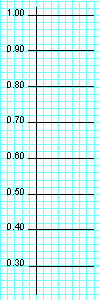 Create a dendrogram.
This is a graph of the data which indicates where the various taxa split
from each other. The taxa should be listed, equally-spaced, across the top
of the page/graph, but thought is needed, first, to determine the order in
which they should be listed. For example, for the farm animals, if they are
listed in the order, “lizard, duck, chicken, pig, cow, horse” that will
cause a problem because pig and horse are one of the first pairs to be
combined, and thus, must be listed next to each other.
Create a dendrogram.
This is a graph of the data which indicates where the various taxa split
from each other. The taxa should be listed, equally-spaced, across the top
of the page/graph, but thought is needed, first, to determine the order in
which they should be listed. For example, for the farm animals, if they are
listed in the order, “lizard, duck, chicken, pig, cow, horse” that will
cause a problem because pig and horse are one of the first pairs to be
combined, and thus, must be listed next to each other.
The Y-axis represents the percentage of shared traits. If you start your
graph at the top of your lab notebook page, right under your cross references
and let each space represent 0.02 units, the bottom of the graph won’t go
all the way down to zero at the bottom of the page, but should be low-enough
to include all the data.

Farm Animal Dendrogram
For the taxa which are the most closely related, draw a line down from each
of those taxa to the level where they are related, and at that level, join
them with a horizontal line. For example, for our farm animals, a line
would be drawn down from chicken and duck to the 0.90 level, at which point
a horizontal line would connect those lines. A line would be drawn from the
center of that connector down to the next level, and there, connected with
the appropriate taxon. For the farm animals, the dendrogram would look like
this. (Note that to save space, on the graph, “Lz” = lizard, “Ch” = chicken,
“Dk” = duck, “Pg” = pig, “Hr” = horse, and “Cw” = cow.)
Use the numbers you have calculated for the insect orders to draw a
dendrogram for that group of organisms.
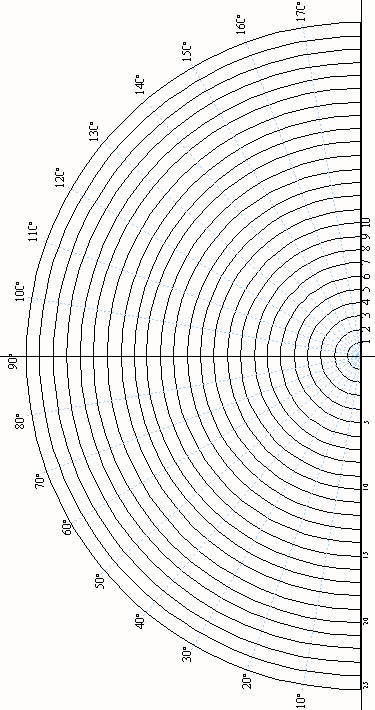
Semicircular Graph Paper
- Create a semicircular graph.
This is an alternative way to represent the same data. Use the semicircular
graph paper (above) which is included with this protocol (this was turned
sideways because it fit better that way).
Find the taxon with the lowest total index score (so that’s presumably the
least advanced one). This is considered the most primitive taxon and serves
as the standard of comparison for the others.
Place a dot for that taxon on the baseline of the graph, to the left of
center. The distance to the left is its total index score values, which is
its degree of evolutionary advancement.
Again, continuing the farm animals example, first, examine the right-hand
column of Table 1 (above), and look for the taxon with the lowest total
(thus, the most primitive). In the case of the farm animals, that would be
the lizard, which has a total of 0 advanced traits (that’s a bit unusual, and
only a result of the traits that were chosen — usually the lowest taxon has
a total greater than zero). Go out that many units straight to the left of
(0,0), along the x-axis, and put a dot there to represent that
taxon.
For each subsequent taxon, the distance out from the center represents the
degree of evolutionary advancement and the “angle of radius with the baseline”
represents the degree of divergence from the standard of comparison.
Thus, for each of the other taxa, two numbers will be needed: that taxon’s
total, as well as how many traits (no matter whether a “0” or a “1”) that
taxon shares in common with the most primitive one, identified above
(symbolized by “r”). It might help to summarize these numbers in
another table. For the farm animals being used as an example, this would
look like:
| |
Σ = |
# in common w/ lizard |
| chicken |
Σ=3 |
r=7 |
| duck |
Σ=4 |
r=6 |
| horse |
Σ=5 |
r=5 |
| pig |
Σ=6 |
r=4 |
| cow |
Σ=7 |
r=3 |
Next, the divergence, the angle up from the left side of the X-axis,
symbolized by “D,” must be calculated for each taxon. If the total
number of characters being compared is symbolized by “x” (for the
farm animals, 10 traits are being compared), the formula for D is
Thus, for the farm animals:
| |
Σ = |
D = |
| chicken |
Σ=3 |
D=(10–7)×18=54° |
| duck |
Σ=4 |
D=(10–6)×18=72° |
| horse |
Σ=5 |
D=(10–5)×18=90° |
| pig |
Σ=6 |
D=(10–4)×18=108° |
| cow |
Σ=7 |
D=(10–3)×18=126° |
Each taxon will be plotted on the semicircular graph “Σ” units/rings
out from the center and “D” degrees up from the left side of the X-axis.
For example, because chicken has a total score of 3, it gets plotted on the
“3” circle, 54 up from the left side of the X-axis.
Then, a common ancestor for all but the most primitive taxon must be
calculated. Excluding the taxon that was chosen as the most primitive
(lizard), next determine a common ancestor (A1) for the remaining taxa.
First, find all the characters-in-common that all of them share. The sum of
scores for the positive matches equals the total index score for the common
ancestor A1. For example:
| |
body |
toes |
web |
eggs |
rumen |
temp |
teeth |
heart |
arms |
horns |
Σ= |
| lizard |
0 |
0 |
0 |
0 |
0 |
0 |
0 |
0 |
0 |
0 |
0 |
| duck |
0 |
0 |
1 |
0 |
0 |
1 |
0 |
1 |
1 |
0 |
4 |
| chicken |
0 |
0 |
0 |
0 |
0 |
1 |
0 |
1 |
1 |
0 |
3 |
| pig |
1 |
1 |
0 |
1 |
0 |
1 |
1 |
1 |
0 |
0 |
6 |
| cow |
1 |
1 |
0 |
1 |
1 |
1 |
0 |
1 |
0 |
1 |
7 |
| horse |
1 |
1 |
0 |
1 |
0 |
1 |
0 |
1 |
0 |
0 |
5 |
| A1 |
— |
— |
— |
— |
— |
1 |
— |
1 |
— |
— |
2 |
To determine the radius on which common ancestor A1 lies, calculate the mean
of the divergence values for all the taxa except the first one, so
In other words, average the degrees, so for chicken, duck, horse, pig, and
cow, DA1=(54+72+90+108+126)/5=90. That means that, for the farm
animals, A1 would be on the 2 circle, 90 up. Thus, for the farm animals, so
far the graph would look like the Partial Graph, below.
Next, any other needed common ancestors would be calculated in a similar
manner. By visual inspection, look for what looks like clusters of taxa.
For each cluster, find a common ancestor (A2, A3, etc.) by averaging all the
values for the taxa in that cluster. If A2 has the same index score as A1,
that means the cluster is artificial and one or more of its taxa don’t
belong in the cluster, but come separately off A1.
Again using the farm animals as an example, after plotting the various points
as calculated, above (and from looking at the Partial Graph), chicken and
duck look “clumped,” and the others (cow, pig, horse) all look fairly close
to each other. Thus, cow, pig, and horse, should be used to calculate A2,
similar to the way A1 was calculated. As noted in the table, below,
&Sigma=5. Also, DA2 = (90+108+126)/3=108. Thus, A2 would be
plotted where 108 crosses the 5 circle.
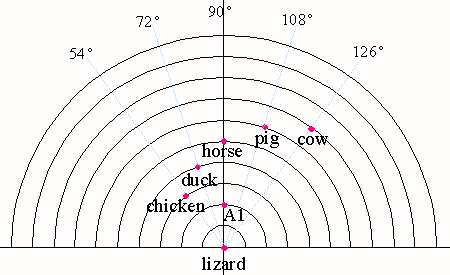
Partial Graph
| |
body |
toes |
web |
eggs |
rumen |
temp |
teeth |
heart |
arms |
horns |
Σ= |
| lizard |
0 |
0 |
0 |
0 |
0 |
0 |
0 |
0 |
0 |
0 |
0 |
| duck |
0 |
0 |
1 |
0 |
0 |
1 |
0 |
1 |
1 |
0 |
4 |
| chicken |
0 |
0 |
0 |
0 |
0 |
1 |
0 |
1 |
1 |
0 |
3 |
| pig |
1 |
1 |
0 |
1 |
0 |
1 |
1 |
1 |
0 |
0 |
6 |
| cow |
1 |
1 |
0 |
1 |
1 |
1 |
0 |
1 |
0 |
1 |
7 |
| horse |
1 |
1 |
0 |
1 |
0 |
1 |
0 |
1 |
0 |
0 |
5 |
| A1 |
— |
— |
— |
— |
— |
1 |
— |
1 |
— |
— |
2 |
| A2 |
1 |
1 |
0 |
1 |
— |
1 |
— |
1 |
0 |
— |
5 |
However, it may not be immediately visually apparent which of those taxa
share a common ancestor. This may be determined by comparing how many traits
each of the taxa share in common with each of the others by looking at the
total scores for each of the taxa in the cluster. To do this, a chart may
be constructed to find out how characters correlate between taxa (rather
than how far they have advance beyond the ancestral condition. A matrix of
taxon-character relationships may be made by inserting in each square the
number of characters-in-common for the 2 taxa involved. This results in a
table such as the following:
| |
pig |
cow |
horse |
Σ= |
| pig |
— |
7 |
9 |
16 |
| cow |
7 |
— |
8 |
15 |
| horse |
9 |
8 |
— |
17 |
The taxon with the lowest total has less characters in common with the other
taxa than they do with each other, so it may be assumed that it comes off
directly from A2, separately from the rest. The remaining taxa are used to
calculate A3.
Since cow has the lowest total in common with the others (pig and horse), it
may be assumed it comes off of A2 separately, and thus pig and horse may be
used to calculate A3, the common ancestor between the two of them. Thus, for
A3, Σ=5 and D=(90+108)/2=99.
Do the same for any other apparent clusters. For example, another common
ancestor (A4) is needed for duck and chicken. For that, Σ=3 and
D=(54+72)/2=63. Thus, adding A3 and A4 to the above table gives:
| |
body |
toes |
web |
eggs |
rumen |
temp |
teeth |
heart |
arms |
horns |
Σ= |
| lizard |
0 |
0 |
0 |
0 |
0 |
0 |
0 |
0 |
0 |
0 |
0 |
| duck |
0 |
0 |
1 |
0 |
0 |
1 |
0 |
1 |
1 |
0 |
4 |
| chicken |
0 |
0 |
0 |
0 |
0 |
1 |
0 |
1 |
1 |
0 |
3 |
| pig |
1 |
1 |
0 |
1 |
0 |
1 |
1 |
1 |
0 |
0 |
6 |
| cow |
1 |
1 |
0 |
1 |
1 |
1 |
0 |
1 |
0 |
1 |
7 |
| horse |
1 |
1 |
0 |
1 |
0 |
1 |
0 |
1 |
0 |
0 |
5 |
| A1 |
— |
— |
— |
— |
— |
1 |
— |
1 |
— |
— |
2 |
| A2 |
1 |
1 |
0 |
1 |
— |
1 |
— |
1 |
0 |
— |
5 |
| A3 |
1 |
1 |
0 |
1 |
0 |
1 |
— |
1 |
0 |
0 |
5 |
| A4 |
0 |
0 |
— |
0 |
0 |
1 |
0 |
1 |
1 |
0 |
3 |
Then, all the dots may be connected to show a model of the phylogenetic
relationships between the taxa. After adding in A2, A3, and A4, then
connecting everything together with lines, the final graph for the farm
animals looks like:

Finished Graph
V. Data:
Here is the background information you will be using.
The insect orders to be compared are:
- Thysanura (silverfish)
- Odonata (dragonflies, damselflies)
- Orthoptera (grasshoppers, katydids, crickets)
- Dictyoptera (mantises, roaches, walkingsticks, leaf insects)
- Isoptera (termites)
- Hemiptera (true bugs)
- Homoptera (cicadas, hoppers, aphids, scales)
- Coleoptera (beetles)
- Siphonaptera (fleas)
- Diptera (flies)
- Lepidoptera (butterflies, moths)
- Hymenoptera (bees, ants, wasps)
The traits to be compared are:
METAMORPHOSIS AND HABITAT
- Type of
metamorphosis
- Ametabolous (no metamorphosis, no wing development) or
paurometabolous (gradual metamorphosis, external wing development),
young resemble adults
- Hemimetabolous (naiads, external wing development) or
holometabolous (internal wing development), young do not resemble
adults
- Habitat
and food
- Young and adults in same habitat, eating same food
- Young and adults in different habitats and/or eating different
food
- Free-living
vs parasitic
- All group members are free-living
- Some group members are parasitic
- Pollinators
- No group members play a major role as pollinators
- Some group members are pollinators
- Parental
care
- No parental care of young
- Some parental care of young
- Social
structure
- Solitary, occasionally gregarious
- Some members are colonial with a queen (and king), organized
society structure
- Terrestrial
vs. aquatic
- Terrestrial adults in all group members
- Aquatic adults in at least some group members, may carry air
bubble or have breathing tube
- Bioluminescence
- Not bioluminescent
- Some bioluminescent members
- Moisture-
and light-tolerance
- Soft-bodied, more-moist habitats, often darker areas and/or
nocturnal
- Harder bodies, drier habitats, more-often diurnal and/or in
lighter areas
- Body
coloration
- Bodies brown, black, gray colors to blend in
- Bodies of some group members more brightly colored (for a
variety of reasons)
WINGS
- Presence
of wings
- Wings absent in adults of all members of the group
- Wings present in most members of the group
- Wing
size and shape
- Front and back wings both membranous and similar in shape and
size [or lacking]
- If present, front and/or back wings considerably different shape
and size
- Membranous
vs. modified forewings
- Front wings membranous [or lacking]
- If present, front wings leathery (tegmina), hardened (elytra,
hemelytra), etc.
- Scales
on wings
- Wings without scales [or lacking]
- If present, wings covered with scales
- Membranous
vs. modified hindwings
- Hindwings membranous [or lacking]
- If present, hindwings modified as halteres
- Amount
of wing venation
- Much wing venation [or lacking]
- If present, reduced wing venation
- Can
wings be folded
- Paleoptera, inability to flex wings over abdomen [or lacking]
- Neoptera, wings can be folded
LEGS, MOUTHPARTS, AND OTHER APPENDAGES
- Type
of legs
- All legs cursorial (crawling/walking/running)
- Some legs raptorial, fossorial (digging), saltatorial (jumping),
oarlike for swimming, etc.
- Type
of mouthparts
- All members of the group have chewing (mandibulate) mouthparts
in all life stages
- At least some members of the group have mouthparts modified for
other methods of obtaining food (piercing-sucking, siphoning,
sponging, etc.), at least as adults
- Presence
of obvious ovipositor
- Females of all group members with no obvious ovipositor
- Females of some group members with a highly-modified, obvious
ovipositor
- Presence
of tracheal gills
- Terrestrial (or aquatic) young, no tracheal gills in any stage
- Aquatic young with tracheal gills
- Shape
of antennal segments
- Antennae filiform or moniliform, all segments about the same size
and shape
- Antennae of at least some group members clavate, serrate,
pectinate, plumose, aristate, flabellate, lamellate, or geniculate,
etc.
- Position
of mouthparts
- Entognathous, mouthparts covered by cranial folds (look like
they’re withdrawn into the head)
- Ectognathous, exposed mouthparts (stick out from the front of the
head)
BODY SHAPE
- General
body shape
- Body of all group members longer, “centipede-like” or “worm-like,”
and “generic”
- Body of some group members shorter and wider, having a “waist” or
modified in some other way
- Presence
of compound eyes
- Compound eyes lacking or very small in all group members
- Compound eyes large and well-developed in at least some group
members
REPRODUCTION
- Style
of bearing young
- All females are oviparous
- Some females are ovoviviparous or viviparous
- (α)
System of sex determination
- XY, XO or ZW sex determination
- Haplodiploidy
- (β)
Bioluminescence
- Bioluminescence not used in courtship
- Bioluminescence used in courtship/mating
SOUND PRODUCTION AND RECEPTION
- (γ)
Presence of tympanum on legs
- Legs without a tympanum
- Prothoracic legs with a tympanum
- (δ)
Sound production
- All members are silent
- Some members produce sound, often used in courtship
Putting that information together into the initial
matrix would look like:
| Traits of Insect Orders |
| |
A |
B |
C |
D |
E |
F |
G |
H |
I |
J |
K |
L |
M |
N |
O |
P |
Q |
R |
S |
T |
U |
V |
W |
X |
Y |
Z |
α |
β |
γ |
δ |
Σ |
| 1 |
Thysanura |
0 |
0 |
0 |
0 |
0 |
0 |
0 |
0 |
0 |
0 |
0 |
0 |
0 |
0 |
0 |
0 |
0 |
0 |
0 |
0 |
0 |
0 |
1 |
0 |
1 |
0 |
0 |
0 |
0 |
0 |
2 |
| 2 |
Odonata |
1 |
1 |
0 |
0 |
0 |
0 |
0 |
0 |
1 |
1 |
1 |
0 |
0 |
0 |
0 |
0 |
0 |
0 |
0 |
0 |
1 |
0 |
1 |
0 |
1 |
0 |
0 |
0 |
0 |
0 |
8 |
| 3 |
Orthoptera |
0 |
0 |
0 |
0 |
0 |
0 |
0 |
0 |
1 |
1 |
1 |
1 |
1 |
0 |
0 |
1 |
1 |
1 |
0 |
1 |
0 |
0 |
1 |
0 |
1 |
0 |
0 |
0 |
1 |
1 |
13 |
| 4 |
Dictyoptera |
0 |
0 |
0 |
0 |
1 |
0 |
0 |
0 |
1 |
1 |
1 |
1 |
1 |
0 |
0 |
1 |
1 |
1 |
0 |
1 |
0 |
0 |
1 |
1 |
1 |
1 |
0 |
0 |
1 |
1 |
16 |
| 5 |
Isoptera |
0 |
0 |
0 |
0 |
1 |
1 |
0 |
0 |
0 |
0 |
1 |
0 |
0 |
0 |
0 |
0 |
1 |
0 |
0 |
0 |
0 |
0 |
1 |
0 |
1 |
0 |
0 |
0 |
0 |
0 |
6 |
| 6 |
Hemiptera |
0 |
0 |
1 |
0 |
1 |
0 |
1 |
0 |
1 |
1 |
1 |
1 |
1 |
0 |
0 |
1 |
1 |
1 |
1 |
0 |
1 |
0 |
1 |
1 |
1 |
0 |
0 |
0 |
0 |
0 |
16 |
| 7 |
Homoptera |
0 |
0 |
0 |
0 |
1 |
0 |
0 |
0 |
1 |
1 |
1 |
1 |
1 |
0 |
0 |
1 |
1 |
1 |
1 |
1 |
0 |
0 |
1 |
1 |
1 |
1 |
0 |
0 |
1 |
1 |
17 |
| 8 |
Coleoptera |
1 |
1 |
0 |
1 |
1 |
0 |
1 |
1 |
1 |
1 |
1 |
1 |
1 |
0 |
0 |
1 |
1 |
1 |
0 |
0 |
1 |
1 |
1 |
1 |
1 |
0 |
0 |
1 |
0 |
1 |
21 |
| 9 |
Siphonaptera |
1 |
1 |
1 |
0 |
0 |
0 |
0 |
0 |
1 |
0 |
0 |
0 |
0 |
0 |
0 |
0 |
1 |
1 |
1 |
0 |
0 |
1 |
1 |
1 |
1 |
0 |
0 |
0 |
0 |
0 |
11 |
| 10 |
Diptera |
1 |
1 |
1 |
1 |
0 |
0 |
0 |
1 |
1 |
1 |
1 |
1 |
0 |
0 |
1 |
1 |
1 |
1 |
1 |
0 |
1 |
1 |
1 |
1 |
1 |
1 |
0 |
0 |
0 |
1 |
21 |
| 11 |
Lepidoptera |
1 |
1 |
1 |
1 |
0 |
0 |
0 |
0 |
1 |
1 |
1 |
1 |
0 |
1 |
0 |
1 |
1 |
0 |
1 |
0 |
0 |
1 |
1 |
1 |
1 |
0 |
0 |
0 |
0 |
1 |
17 |
| 12 |
Hymenoptera |
1 |
1 |
1 |
1 |
1 |
1 |
0 |
0 |
1 |
1 |
1 |
1 |
0 |
0 |
0 |
1 |
1 |
1 |
0 |
1 |
0 |
1 |
1 |
1 |
1 |
1 |
1 |
0 |
0 |
1 |
21 |
Table 13. Data Matrix for Insect Orders
Complete the calculations, tables, and graphs as
requested/instructed. Everything except the semicircular graph should be
done in your lab notebook. Plot the semicircular graph on the
graph paper included here, using a protractor to help plot the angles
involved.
VI. Discussion:
In a book or online, look up an "official" phylogenetic tree
for the insect orders, compare with your results, and comment on the
similarities and differences. Did your phylogenetic tree turn out similar to
or different from the "official" one? If different, what do you think would
have caused that difference, and what could be done to increase the accuracy
of our class results?
Answers for Instructors
| Traits of Insect Orders |
| |
A |
B |
C |
D |
E |
F |
G |
H |
I |
J |
K |
L |
M |
N |
O |
P |
Q |
R |
S |
T |
U |
V |
W |
X |
Y |
Z |
α |
β |
γ |
δ |
Σ |
| 1 |
Thysanura |
0 |
0 |
0 |
0 |
0 |
0 |
0 |
0 |
0 |
0 |
0 |
0 |
0 |
0 |
0 |
0 |
0 |
0 |
0 |
0 |
0 |
0 |
1 |
0 |
1 |
0 |
0 |
0 |
0 |
0 |
2 |
| 2 |
Odonata |
1 |
1 |
0 |
0 |
0 |
0 |
0 |
0 |
1 |
1 |
1 |
0 |
0 |
0 |
0 |
0 |
0 |
0 |
0 |
0 |
1 |
0 |
1 |
0 |
1 |
0 |
0 |
0 |
0 |
0 |
8 |
| 3 |
Orthoptera |
0 |
0 |
0 |
0 |
0 |
0 |
0 |
0 |
1 |
1 |
1 |
1 |
1 |
0 |
0 |
1 |
1 |
1 |
0 |
1 |
0 |
0 |
1 |
0 |
1 |
0 |
0 |
0 |
1 |
1 |
13 |
| 4 |
Dictyoptera |
0 |
0 |
0 |
0 |
1 |
0 |
0 |
0 |
1 |
1 |
1 |
1 |
1 |
0 |
0 |
1 |
1 |
1 |
0 |
1 |
0 |
0 |
1 |
1 |
1 |
1 |
0 |
0 |
1 |
1 |
16 |
| 5 |
Isoptera |
0 |
0 |
0 |
0 |
1 |
1 |
0 |
0 |
0 |
0 |
1 |
0 |
0 |
0 |
0 |
0 |
1 |
0 |
0 |
0 |
0 |
0 |
1 |
0 |
1 |
0 |
0 |
0 |
0 |
0 |
6 |
| 6 |
Hemiptera |
0 |
0 |
1 |
0 |
1 |
0 |
1 |
0 |
1 |
1 |
1 |
1 |
1 |
0 |
0 |
1 |
1 |
1 |
1 |
0 |
1 |
0 |
1 |
1 |
1 |
0 |
0 |
0 |
0 |
0 |
16 |
| 7 |
Homoptera |
0 |
0 |
0 |
0 |
1 |
0 |
0 |
0 |
1 |
1 |
1 |
1 |
1 |
0 |
0 |
1 |
1 |
1 |
1 |
1 |
0 |
0 |
1 |
1 |
1 |
1 |
0 |
0 |
1 |
1 |
17 |
| 8 |
Coleoptera |
1 |
1 |
0 |
1 |
1 |
0 |
1 |
1 |
1 |
1 |
1 |
1 |
1 |
0 |
0 |
1 |
1 |
1 |
0 |
0 |
1 |
1 |
1 |
1 |
1 |
0 |
0 |
1 |
0 |
1 |
21 |
| 9 |
Siphonaptera |
1 |
1 |
1 |
0 |
0 |
0 |
0 |
0 |
1 |
0 |
0 |
0 |
0 |
0 |
0 |
0 |
1 |
1 |
1 |
0 |
0 |
1 |
1 |
1 |
1 |
0 |
0 |
0 |
0 |
0 |
11 |
| 10 |
Diptera |
1 |
1 |
1 |
1 |
0 |
0 |
0 |
1 |
1 |
1 |
1 |
1 |
0 |
0 |
1 |
1 |
1 |
1 |
1 |
0 |
1 |
1 |
1 |
1 |
1 |
1 |
0 |
0 |
0 |
1 |
21 |
| 11 |
Lepidoptera |
1 |
1 |
1 |
1 |
0 |
0 |
0 |
0 |
1 |
1 |
1 |
1 |
0 |
1 |
0 |
1 |
1 |
0 |
1 |
0 |
0 |
1 |
1 |
1 |
1 |
0 |
0 |
0 |
0 |
1 |
17 |
| 12 |
Hymenoptera |
1 |
1 |
1 |
1 |
1 |
1 |
0 |
0 |
1 |
1 |
1 |
1 |
0 |
0 |
0 |
1 |
1 |
1 |
0 |
1 |
0 |
1 |
1 |
1 |
1 |
1 |
1 |
0 |
0 |
1 |
21 |
| Number in Common with Each Other
|
| |
1 |
2 |
3 |
4 |
5 |
6 |
7 |
8 |
9 |
10 |
11 |
12 |
 |
 |
 |
 |
 |
 |
 |
 |
 |
 |
 |
 |
| 1 |
Thysanura |
— |
24 |
19 |
16 |
26 |
16 |
15 |
11 |
21 |
11 |
15 |
11 |
| 2 |
Odonata |
|
— |
19 |
16 |
22 |
18 |
15 |
17 |
21 |
17 |
19 |
15 |
| 3 |
Orthoptera |
|
|
— |
27 |
19 |
21 |
26 |
18 |
16 |
16 |
18 |
18 |
| 4 |
Dictyoptera |
|
|
|
— |
18 |
22 |
29 |
19 |
15 |
17 |
17 |
21 |
| 5 |
Isoptera |
|
|
|
|
— |
18 |
17 |
13 |
19 |
11 |
15 |
15 |
| 6 |
Hemiptera |
|
|
|
|
|
— |
23 |
21 |
19 |
19 |
19 |
17 |
| 7 |
Homoptera |
|
|
|
|
|
|
— |
18 |
16 |
18 |
18 |
20 |
| 8 |
Coleoptera |
|
|
|
|
|
|
|
— |
16 |
22 |
20 |
20 |
| 9 |
Siphonaptera |
|
|
|
|
|
|
|
|
— |
20 |
22 |
18 |
| 10 |
Diptera |
|
|
|
|
|
|
|
|
|
— |
24 |
22 |
| 11 |
Lepidoptera |
|
|
|
|
|
|
|
|
|
|
— |
22 |
| 12 |
Hymenoptera |
|
|
|
|
|
|
|
|
|
|
|
— |
Maximum = 29 traits in common (out of 30).
Then, convert to fraction/percentage and do an analysis.
| |
1 |
2 |
3 |
4 |
5 |
6 |
7 |
8 |
9 |
10 |
11 |
12 |
|
|
|
|
|
|
|
|
|
|
|
|
| 1 |
Thysanura |
— |
0.80 |
0.63 |
0.53 |
0.87 |
0.53 |
0.50 |
0.37 |
0.70 |
0.37 |
0.50 |
0.37 |
| 2 |
Odonata |
|
— |
0.63 |
0.53 |
0.73 |
0.60 |
0.50 |
0.57 |
0.70 |
0.57 |
0.63 |
0.50 |
| 3 |
Orthoptera |
|
|
— |
0.90 |
0.63 |
0.70 |
0.87 |
0.60 |
0.53 |
0.53 |
0.60 |
0.60 |
| 4 |
Dictyoptera |
|
|
|
— |
0.60 |
0.73 |
0.97 |
0.63 |
0.50 |
0.57 |
0.57 |
0.70 |
| 5 |
Isoptera |
|
|
|
|
— |
0.60 |
0.57 |
0.43 |
0.63 |
0.37 |
0.50 |
0.50 |
| 6 |
Hemiptera |
|
|
|
|
|
— |
0.77 |
0.70 |
0.63 |
0.63 |
0.63 |
0.57 |
| 7 |
Homoptera |
|
|
|
|
|
|
— |
0.60 |
0.53 |
0.60 |
0.60 |
0.67 |
| 8 |
Coleoptera |
|
|
|
|
|
|
|
— |
0.53 |
0.73 |
0.67 |
0.67 |
| 9 |
Siphonaptera |
|
|
|
|
|
|
|
|
— |
0.67 |
0.73 |
0.60 |
| 10 |
Diptera |
|
|
|
|
|
|
|
|
|
— |
0.80 |
0.73 |
| 11 |
Lepidoptera |
|
|
|
|
|
|
|
|
|
|
— |
0.73 |
| 12 |
Hymenoptera |
|
|
|
|
|
|
|
|
|
|
|
— |
Maximum = 0.97, so combine #4 & 7.
| |
1 |
2 |
3 |
4-7 |
5 |
6 |
8 |
9 |
10 |
11 |
12 |
|
|
|
 |
|
|
|
|
|
|
|
| 1 |
Thysanura |
— |
0.80 |
0.63 |
0.52 |
0.87 |
0.53 |
0.37 |
0.70 |
0.37 |
0.50 |
0.37 |
| 2 |
Odonata |
|
— |
0.63 |
0.52 |
0.73 |
0.60 |
0.57 |
0.70 |
0.57 |
0.63 |
0.50 |
| 3 |
Orthoptera |
|
|
— |
0.88 |
0.63 |
0.70 |
0.60 |
0.53 |
0.53 |
0.60 |
0.60 |
| 4-7 |
Dictyo+Homo |
|
|
|
— |
0.58 |
0.75 |
0.62 |
0.52 |
0.58 |
0.58 |
0.68 |
| 5 |
Isoptera |
|
|
|
|
— |
0.60 |
0.43 |
0.63 |
0.37 |
0.50 |
0.50 |
| 6 |
Hemiptera |
|
|
|
|
|
— |
0.70 |
0.63 |
0.63 |
0.63 |
0.57 |
| 8 |
Coleoptera |
|
|
|
|
|
|
— |
0.53 |
0.73 |
0.67 |
0.67 |
| 9 |
Siphonaptera |
|
|
|
|
|
|
|
— |
0.67 |
0.73 |
0.60 |
| 10 |
Diptera |
|
|
|
|
|
|
|
|
— |
0.80 |
0.73 |
| 11 |
Lepidoptera |
|
|
|
|
|
|
|
|
|
— |
0.73 |
| 12 |
Hymenoptera |
|
|
|
|
|
|
|
|
|
|
— |
Maximum = 0.88, so combine #3 & 4-7.
| |
1 |
2 |
3-4-7 |
5 |
6 |
8 |
9 |
10 |
11 |
12 |
|
|
 |
|
|
|
|
|
|
|
| 1 |
Thysanura |
— |
0.80 |
0.58 |
0.87 |
0.53 |
0.37 |
0.70 |
0.37 |
0.50 |
0.37 |
| 2 |
Odonata |
|
— |
0.58 |
0.73 |
0.60 |
0.57 |
0.70 |
0.57 |
0.63 |
0.50 |
| 3-4-7 |
Ortho+Dictyo+Homo |
|
|
— |
0.61 |
0.73 |
0.61 |
0.53 |
0.56 |
0.59 |
0.64 |
| 5 |
Isoptera |
|
|
|
— |
0.60 |
0.43 |
0.63 |
0.37 |
0.50 |
0.50 |
| 6 |
Hemiptera |
|
|
|
|
— |
0.70 |
0.63 |
0.63 |
0.63 |
0.57 |
| 8 |
Coleoptera |
|
|
|
|
|
— |
0.53 |
0.73 |
0.67 |
0.67 |
| 9 |
Siphonaptera |
|
|
|
|
|
|
— |
0.67 |
0.73 |
0.60 |
| 10 |
Diptera |
|
|
|
|
|
|
|
— |
0.80 |
0.73 |
| 11 |
Lepidoptera |
|
|
|
|
|
|
|
|
— |
0.73 |
| 12 |
Hymenoptera |
|
|
|
|
|
|
|
|
|
— |
Maximum = 0.87, so combine #1 & 5.
| |
1-5 |
2 |
3-4-7 |
6 |
8 |
9 |
10 |
11 |
12 |
 |
|
|
|
|
|
|
|
|
| 1-5 |
Thysan+Iso |
— |
0.77 |
0.59 |
0.57 |
0.40 |
0.67 |
0.37 |
0.50 |
0.43 |
| 2 |
Odonata |
|
— |
0.58 |
0.60 |
0.57 |
0.70 |
0.57 |
0.63 |
0.50 |
| 3-4-7 |
Ortho+Dictyo+Homo |
|
|
— |
0.73 |
0.61 |
0.53 |
0.56 |
0.59 |
0.64 |
| 6 |
Hemiptera |
|
|
|
— |
0.70 |
0.63 |
0.63 |
0.63 |
0.57 |
| 8 |
Coleoptera |
|
|
|
|
— |
0.53 |
0.73 |
0.67 |
0.67 |
| 9 |
Siphonaptera |
|
|
|
|
|
— |
0.67 |
0.73 |
0.60 |
| 10 |
Diptera |
|
|
|
|
|
|
— |
0.80 |
0.73 |
| 11 |
Lepidoptera |
|
|
|
|
|
|
|
— |
0.73 |
| 12 |
Hymenoptera |
|
|
|
|
|
|
|
|
— |
Maximum = 0.80, so combine #10 & 11.
| |
1-5 |
2 |
3-4-7 |
6 |
8 |
9 |
10-11 |
12 |
|
|
|
|
|
|
 |
|
| 1-5 |
Thysan+Iso |
— |
0.77 |
0.59 |
0.57 |
0.40 |
0.67 |
0.43 |
0.43 |
| 2 |
Odonata |
|
— |
0.58 |
0.60 |
0.57 |
0.70 |
0.60 |
0.50 |
| 3-4-7 |
Ortho+Dictyo+Homo |
|
|
— |
0.73 |
0.61 |
0.53 |
0.58 |
0.64 |
| 6 |
Hemiptera |
|
|
|
— |
0.70 |
0.63 |
0.63 |
0.57 |
| 8 |
Coleoptera |
|
|
|
|
— |
0.53 |
0.70 |
0.67 |
| 9 |
Siphonaptera |
|
|
|
|
|
— |
0.70 |
0.60 |
| 10-11 |
Di+Lepido |
|
|
|
|
|
|
— |
0.73 |
| 12 |
Hymenoptera |
|
|
|
|
|
|
|
— |
Maximum = 0.77, so combine #2 & 1-5.
| |
1-5-2 |
3-4-7 |
|
8 |
9 |
10-11 |
12 |
 |
|
|
|
|
|
|
| 1-5-2 |
Thysan+Iso+Odon |
— |
0.58 |
0.58 |
0.48 |
0.68 |
0.52 |
0.47 |
| 3-4-7 |
Ortho+Dictyo+Homo |
|
— |
0.73 |
0.61 |
0.53 |
0.58 |
0.64 |
| 6 |
Hemiptera |
|
|
— |
0.70 |
0.63 |
0.63 |
0.57 |
| 8 |
Coleoptera |
|
|
|
— |
0.53 |
0.70 |
0.67 |
| 9 |
Siphonaptera |
|
|
|
|
— |
0.70 |
0.60 |
| 10-11 |
Di+Lepido |
|
|
|
|
|
— |
0.73 |
| 12 |
Hymenoptera |
|
|
|
|
|
|
— |
Maximum = 0.73, so combine #6 & 3-4-7 and 12 & 10-11.
| |
1-5-2 |
3-4-7-6 |
8 |
9 |
10-11-12 |
|
 |
|
|
 |
| 1-5-2 |
Thysan+Iso+Odon |
— |
0.58 |
0.48 |
0.68 |
0.49 |
| 3-4-7-6 |
Ortho+Dictyo+Homo+Hemi |
|
— |
0.65 |
0.58 |
0.60 |
| 8 |
Coleoptera |
|
|
— |
0.53 |
0.68 |
| 9 |
Siphonaptera |
|
|
|
— |
0.65 |
| 10-11-12 |
Di+Lepido+Hymeno |
|
|
|
|
— |
Maximum = 0.68, so combine #8 & 10-11-12 and 9 & 1-5-2.
| |
1-5-2-9 |
3-4-7-6 |
8-10-11-12 |
 |
|
 |
| 1-5-2-9 |
Thysan+Iso+Odon+Siphon |
— |
0.58 |
0.54 |
| 3-4-7-6 |
Ortho+Dictyo+Homo+Hemi |
|
— |
0.63 |
| 8-10-11-12 |
Di+Lepido+Hymeno+Coleo |
|
|
— |
Maximum = 0.63, so combine #3-4-7-6 & 8-10-11-12.
| |
1-5-2-9 |
3-4-7-6-8
-10-11-12 |
|
 |
| 1-5-2-9 |
Thysan+Iso+Odon+Siphon |
— |
0.56 |
3-4-7-6-8
-10-11-12 |
Ortho+Dictyo+Homo+Hemi+Di
+Lepido+Hymeno+Coleo |
|
— |
Maximum = 0.56, so combine all.
Here’s an overall summary of the taxa which were
combined:
| Summary |
% |
| 4-7 |
0.97 |
| 3-4-7 |
0.88 |
| 1-5 |
0.87 |
| 10-11 |
0.80 |
| 1-5-2 |
0.77 |
| 3-4-6-7 |
0.73 |
| 10-11-12 |
0.73 |
| 8-10-11-12 |
0.68 |
| 1-5-2-9 |
0.68 |
| 3-4-7-6-8-10-11-12 |
0.63 |
| 1-5-2-9-3-4-7-6-8-10-11-12 |
0.56 |
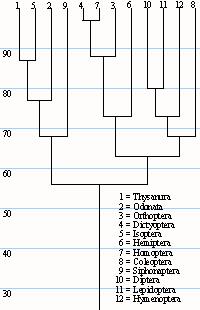 Then, use those percentages to make a dendrogram.
Compare those results with an “official”
dendrogram from Borror & DeLong, a standard entomology textbook. Note:
insect orders to be compared are those in black, while pale ones are other
orders not being considered, here. Notice that, for this dendrogram, actual
percentages are not represented. Note that, to simplify what we’re doing in
lab, we’re using the “older” category of Dictyoptera = Roaches + Mantises +
Walkingsticks, which Borror & Delong split into several orders, as shown
here.
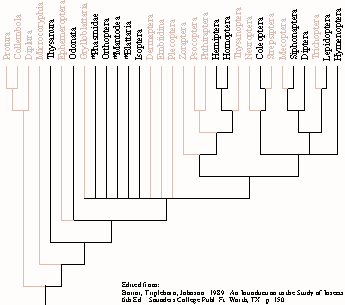
(Note that our calculations are only as good as the reliability of the traits
we’ve chosen to use. Obviously, there are some problems with the traits that
we’ve been using, because our results didn’t match exactly with the
“accepted” dendrogram — note which are actually closest (Orthoptera +
Dictyoptera, Hemiptera + Homoptera, etc.). Probably, what is needed are some
“heavy duty” traits that are beyond what freshman students could easily
understand.)
Then to construct the semicircular graph, first remember that
the total number of characters being compared is symbolized by “x”
(and, in this case, there are 30 traits being compared). Remember that the
formula for D is:
From the first chart (Traits of Insect Orders, at start of “Answers...”
section), the most primitive organism (lowest total score) is #1, Thysanura
with a total of 2 advanced traits. Thus, on a semicircular graph, that would
be placed on the x-axis, 2 units to the left of center. For the other taxa,
the calculations would be [for Odonata, (30–24)×(180/30)=6×6=36°],
| |
Σ= |
r (radius)
= # in
common
with
Thysanura
| D= |
| 1 |
Thysanura |
2 |
— |
0° |
| 2 |
Odonata |
8 |
24 |
36° |
| 3 |
Orthoptera |
13 |
19 |
66° |
| 4 |
Dictyoptera |
16 |
16 |
84° |
| 5 |
Isoptera |
6 |
26 |
24° |
| 6 |
Hemiptera |
16 |
16 |
84° |
| 7 |
Homoptera |
17 |
15 |
90° |
| 8 |
Coleoptera |
21 |
11 |
114° |
| 9 |
Siphonaptera |
11 |
21 |
54° |
| 10 |
Diptera |
21 |
11 |
114° |
| 11 |
Lepidoptera |
17 |
15 |
90° |
| 12 |
Hymenoptera |
21 |
11 |
114° |
Then calculate the common ancestors.
| Traits of Insect Orders |
| |
A |
B |
C |
D |
E |
F |
G |
H |
I |
J |
K |
L |
M |
N |
O |
P |
Q |
R |
S |
T |
U |
V |
W |
X |
Y |
Z |
α |
β |
γ |
δ |
Σ |
| 1 |
Thysanura |
0 |
0 |
0 |
0 |
0 |
0 |
0 |
0 |
0 |
0 |
0 |
0 |
0 |
0 |
0 |
0 |
0 |
0 |
0 |
0 |
0 |
0 |
1 |
0 |
1 |
0 |
0 |
0 |
0 |
0 |
2 |
| 2 |
Odonata |
1 |
1 |
0 |
0 |
0 |
0 |
0 |
0 |
1 |
1 |
1 |
0 |
0 |
0 |
0 |
0 |
0 |
0 |
0 |
0 |
1 |
0 |
1 |
0 |
1 |
0 |
0 |
0 |
0 |
0 |
8 |
| 3 |
Orthoptera |
0 |
0 |
0 |
0 |
0 |
0 |
0 |
0 |
1 |
1 |
1 |
1 |
1 |
0 |
0 |
1 |
1 |
1 |
0 |
1 |
0 |
0 |
1 |
0 |
1 |
0 |
0 |
0 |
1 |
1 |
13 |
| 4 |
Dictyoptera |
0 |
0 |
0 |
0 |
1 |
0 |
0 |
0 |
1 |
1 |
1 |
1 |
1 |
0 |
0 |
1 |
1 |
1 |
0 |
1 |
0 |
0 |
1 |
1 |
1 |
1 |
0 |
0 |
1 |
1 |
16 |
| 5 |
Isoptera |
0 |
0 |
0 |
0 |
1 |
1 |
0 |
0 |
0 |
0 |
1 |
0 |
0 |
0 |
0 |
0 |
1 |
0 |
0 |
0 |
0 |
0 |
1 |
0 |
1 |
0 |
0 |
0 |
0 |
0 |
6 |
| 6 |
Hemiptera |
0 |
0 |
1 |
0 |
1 |
0 |
1 |
0 |
1 |
1 |
1 |
1 |
1 |
0 |
0 |
1 |
1 |
1 |
1 |
0 |
1 |
0 |
1 |
1 |
1 |
0 |
0 |
0 |
0 |
0 |
16 |
| 7 |
Homoptera |
0 |
0 |
0 |
0 |
1 |
0 |
0 |
0 |
1 |
1 |
1 |
1 |
1 |
0 |
0 |
1 |
1 |
1 |
1 |
1 |
0 |
0 |
1 |
1 |
1 |
1 |
0 |
0 |
1 |
1 |
17 |
| 8 |
Coleoptera |
1 |
1 |
0 |
1 |
1 |
0 |
1 |
1 |
1 |
1 |
1 |
1 |
1 |
0 |
0 |
1 |
1 |
1 |
0 |
0 |
1 |
1 |
1 |
1 |
1 |
0 |
0 |
1 |
0 |
1 |
21 |
| 9 |
Siphonaptera |
1 |
1 |
1 |
0 |
0 |
0 |
0 |
0 |
1 |
0 |
0 |
0 |
0 |
0 |
0 |
0 |
1 |
1 |
1 |
0 |
0 |
1 |
1 |
1 |
1 |
0 |
0 |
0 |
0 |
0 |
11 |
| 10 |
Diptera |
1 |
1 |
1 |
1 |
0 |
0 |
0 |
1 |
1 |
1 |
1 |
1 |
0 |
0 |
1 |
1 |
1 |
1 |
1 |
0 |
1 |
1 |
1 |
1 |
1 |
1 |
0 |
0 |
0 |
1 |
21 |
| 11 |
Lepidoptera |
1 |
1 |
1 |
1 |
0 |
0 |
0 |
0 |
1 |
1 |
1 |
1 |
0 |
1 |
0 |
1 |
1 |
0 |
1 |
0 |
0 |
1 |
1 |
1 |
1 |
0 |
0 |
0 |
0 |
1 |
17 |
| 12 |
Hymenoptera |
1 |
1 |
1 |
1 |
1 |
1 |
0 |
0 |
1 |
1 |
1 |
1 |
0 |
0 |
0 |
1 |
1 |
1 |
0 |
1 |
0 |
1 |
1 |
1 |
1 |
1 |
1 |
0 |
0 |
1 |
21 |
| A1 |
DA1=79.1 |
– |
– |
– |
– |
– |
– |
– |
– |
– |
– |
– |
– |
– |
– |
– |
– |
– |
– |
– |
– |
– |
– |
1 |
– |
1 |
– |
– |
– |
– |
– |
2 |
| A2 |
DA2=98.6
(4-6-7-11-8-10-12) |
– |
– |
– |
– |
– |
– |
– |
– |
1 |
1 |
1 |
1 |
– |
– |
– |
1 |
1 |
– |
– |
– |
– |
– |
1 |
1 |
1 |
– |
– |
– |
– |
– |
9 |
| A3 |
DA3=87.0
(4-6-7-11) |
– |
– |
– |
– |
– |
0 |
– |
0 |
1 |
1 |
1 |
1 |
– |
– |
0 |
1 |
1 |
– |
– |
– |
– |
– |
1 |
1 |
1 |
– |
0 |
0 |
– |
– |
9 |
| A4 |
DA4=45.0
(5-2-9-3) |
– |
– |
– |
0 |
– |
– |
0 |
0 |
– |
– |
– |
– |
– |
0 |
0 |
– |
– |
– |
– |
– |
– |
– |
1 |
– |
1 |
0 |
0 |
0 |
– |
– |
2 |
| A5 |
DA5=30.0
(5-2) |
– |
– |
0 |
0 |
– |
– |
0 |
0 |
– |
– |
1 |
0 |
0 |
0 |
0 |
0 |
– |
0 |
0 |
0 |
– |
0 |
1 |
0 |
1 |
0 |
0 |
0 |
0 |
0 |
3 |
| A6 |
DA6=60.0
(9-3) |
– |
– |
– |
0 |
0 |
0 |
0 |
0 |
1 |
– |
– |
– |
– |
0 |
0 |
– |
1 |
1 |
– |
– |
0 |
– |
1 |
– |
1 |
0 |
0 |
0 |
– |
– |
5 |
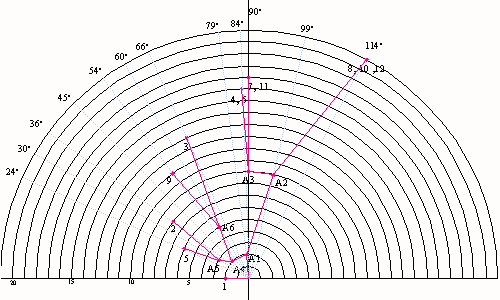
Then, determine what look(s) like clusters:
Initially, after plotting the locations of the taxa and just looking at them,
I visually came up with 2,3,5,9 (Odonata, Orthoptera, Isoptera, Siphonaptera)
clustered and 4-6 (Dictyoptera, Hemiptera), 7-11 (Homoptera, Lepidoptera),
8-10-12 (Coleoptera, Diptera, Hymenoptera) clustered, plus common ancestors
between 2-5 (Odonata, Isoptera) and 9-3 (Orthoptera, Siphonaptera), and also
between 4-6 - 7-11 (Dictyoptera, Hemiptera, Homoptera, Lepidoptera).
Thus:
- 8-10-12: Coleoptera, Diptera, Hymenoptera clustered
- 4-6: Dictyoptera, Hemiptera clustered
- 7-11: Homoptera, Lepidoptera clustered
- then Dictyoptera-Hemiptera + Homoptera-Lepidoptera clustered
- then that clustered with Coleoptera-Diptera-Hymenoptera
plus
- 2-5: Odonata, Isoptera clustered
- 3-9: Orthoptera, Siphonaptera clustered
- then those 2 clustered together
. . . none of which makes any sense — Orthoptera and
Dictyoptera should come out very close together, and Hemiptera and
Homoptera should come out very close together (see figure from Borror
and Delong) — so, obviously, a better set of characters is needed). The
graph of those data would look like this:
However, doing it the “long” way and actually doing some calculations, I came
up with:
| Number in Common with Each Other
|
| |
1 |
2 |
3 |
4 |
5 |
6 |
7 |
8 |
9 |
10 |
11 |
12 |
Tot |
|
|
|
|
|
|
|
|
|
|
|
|
| 1 |
Thysanura |
— |
24 |
19 |
16 |
26 |
16 |
15 |
11 |
21 |
11 |
15 |
11 |
185 |
| 2 |
Odonata |
24 |
— |
19 |
16 |
22 |
18 |
15 |
17 |
21 |
17 |
19 |
15 |
185 |
| 3 |
Orthoptera |
19 |
19 |
— |
27 |
19 |
21 |
26 |
18 |
16 |
16 |
18 |
18 |
217 |
| 4 |
Dictyoptera |
16 |
16 |
27 |
— |
18 |
22 |
29 |
19 |
15 |
17 |
17 |
21 |
217 |
| 5 |
Isoptera |
26 |
22 |
19 |
18 |
— |
18 |
17 |
13 |
19 |
11 |
15 |
15 |
193 |
| 6 |
Hemiptera |
16 |
18 |
21 |
22 |
18 |
— |
23 |
21 |
19 |
19 |
19 |
17 |
213 |
| 7 |
Homoptera |
15 |
15 |
26 |
29 |
17 |
23 |
— |
18 |
16 |
18 |
18 |
20 |
215 |
| 8 |
Coleoptera |
11 |
17 |
18 |
19 |
13 |
21 |
18 |
— |
16 |
22 |
20 |
20 |
195 |
| 9 |
Siphonaptera |
21 |
21 |
16 |
15 |
19 |
19 |
16 |
16 |
— |
20 |
22 |
18 |
203 |
| 10 |
Diptera |
11 |
17 |
16 |
17 |
11 |
19 |
18 |
22 |
20 |
— |
24 |
22 |
197 |
| 11 |
Lepidoptera |
15 |
19 |
18 |
17 |
15 |
19 |
18 |
20 |
22 |
24 |
— |
22 |
209 |
| 12 |
Hymenoptera |
11 |
15 |
18 |
21 |
15 |
17 |
20 |
20 |
18 |
22 |
22 |
— |
199 |
- so the most dissimilar is #1, Thysanura (185)
- then #5, Isoptera (193)
- then #8, Coleoptera (195)
- then #10, Diptera (197)
- then #12, Hymenoptera (199)
- then #2, Odonata + #9, Siphonaptera (203)
- then #11, Lepidoptera (209)
- then #6, Hemiptera (213)
- then #7, Homoptera (215)
- then #3, Orthoptera + #4, Dictyoptera (217)
- This chart, these calculations, would say,pull off Thysanura, then all
else are from A1.
- A1 branches into #5, Isoptera and A2 (which could make sense since #5 is
the next-lowest).
- A2 branches into #8, Coleoptera and A3 (however, 8, 10, and 12 came up
with the same numbers — but #10 and 12 are the next two, here).
- A3 branches into #10, Diptera and A4.
- A4 branches into #12, Hymenoptera and A5.
- A5 branches into #2, Odonata, #9, Siphonaptera, and A6 (#2 and #9 are
next “lowest” after #5 and are fairly close to each other — it could be
shown such that #5, Isoptera comes off separately, while #2, Odonata + #3,
Orthoptera + #9, Siphonaptera share a common ancestor (which makes no more
sense than the way it turned out by “eyeballing” it).
- A6 branches into #11, Lepidoptera and A7.
- A7 branches into #6, Hemiptera and A8 (however, 4 & 6 came up with
the same numbers — also, #6 and #7 should be really close).
- A8 branches into #7, Homoptera and A9.
- A9 branches into #3, Orthoptera and #4, Dictyoptera (which should be
really close — however, in the analysis, #3 was closest to #9 and #4 was
closest to #6).
So. . . this ends up being a good lead-in to discussions of
why taxonomy and phylogeny (and therefore proposed evolutionary relationships)
are not cast in concrete, but are fluctuating
subjects as new discoveries are made, and that the outcome we get is only as
good as the data which are put in, and needs to be modified as new data
become available. For now, anyway, I’m inclined to leave this as
“imperfect,” to show students that science is not always “perfect” and
things don’t always turn out as expected.
Copyright © 2012 by J. Stein Carter. All rights reserved.
Based on printed protocols Copyright © 2012 J. L. Stein Carter.
Chickadee photograph Copyright © by David B. Fankhauser
This page has been accessed  times since 20 Dec 2012.